Weißenstein Castle

The purchase of Weißenstein Castle
Felbertauernstraße AG (FAG) purchased Weißenstein Castle near Matrei in 2020, following the death of its previous owner, Jörg Demus. Two of the three owners immediately agreed to the sale, and the third share was also acquired, although this was more complicated due to the probate proceedings. The 12th-century castle, which until now could only be viewed from the outside, is to be opened to the public after renovation work. In addition to the castle, the site also includes 15 hectares of strategically important land that FAG needs for its projects. A resolution by the FAG supervisory board and approval by the federal government have been obtained, with the purchase price being announced after the acquisition of the last share.

The history
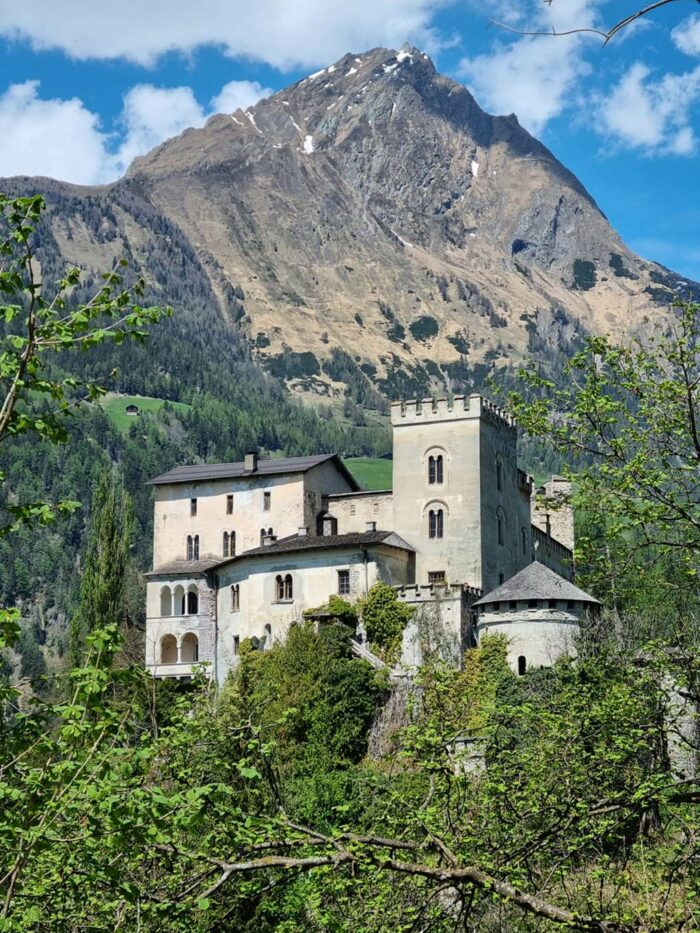
The original fortifications of Weißenstein Castle comprised a keep-like tower, a polygonal broken curtain wall with a chapel, a great hall, and a kitchen wing. The Laurentius Chapel was located on the ground floor of the south tower, but its valuable contents were stolen in 1640. Remains of frescoes by the artist Simon von Taisten can still be found on the outer wall of the chapel. In the 19th century, the castle was converted into a hotel, whereby a Romanesque chapel from the 12th century was built over and only rediscovered later. The old bathtubs and bathrooms bear witness to the castle’s use as a fashionable wellness facility at that time.
1160
First documented mention of Matrei Castle, later called Weißenstein.
1207
Count Heinrich von Lechsgemünd sells the castle to the Archbishop of Salzburg against the will of his wife Wilburgis, which leads to several lawsuits until 1293.
14th century
Weißenstein becomes the seat of Salzburg judges and administrators in the Windisch-Matrei administrative court.
1470
Leonhard von Keutschach has the castle expanded and the fortifications reinforced.
18th century
The castle falls into disrepair after the steward and judge move their official residence to Matrei.
After 1803
After secularization, the castle is partly used as a poorhouse.
1864
The Viennese architect Franz Poduschka purchases the castle and renovates the buildings and towers in the style of English historicist castles.
Late 19th century
Baron Adalbert von Mengershausen has the castle rebuilt in the style of a “romantic castle” based on Rhineland models and the gardens redesigned.
1921
Carl and Else von Thieme acquire the castle.
August 2020
Felbertauernstraße AG purchases Weißenstein Castle and all of the land from the descendants of the von Thieme family.
Future still uncertain
At Weißenstein Castle, you can experience history up close. According to Karl Poppeller, managing director of Felbertauern AG, the future use of the castle after renovation is still unclear. Various options are being considered, but further research is needed before a final decision can be made. It will take around ten years for the castle to be revitalized and find its purpose. The investment is estimated at several million euros.